

INFO CENTER
Firstrate Sensor Co.,Ltd is a leading sensor Manufacturer with 60 years Experience
Anti-icing Wind Sensor Extreme Low-Temp Monitoring Solution
2026-01-13
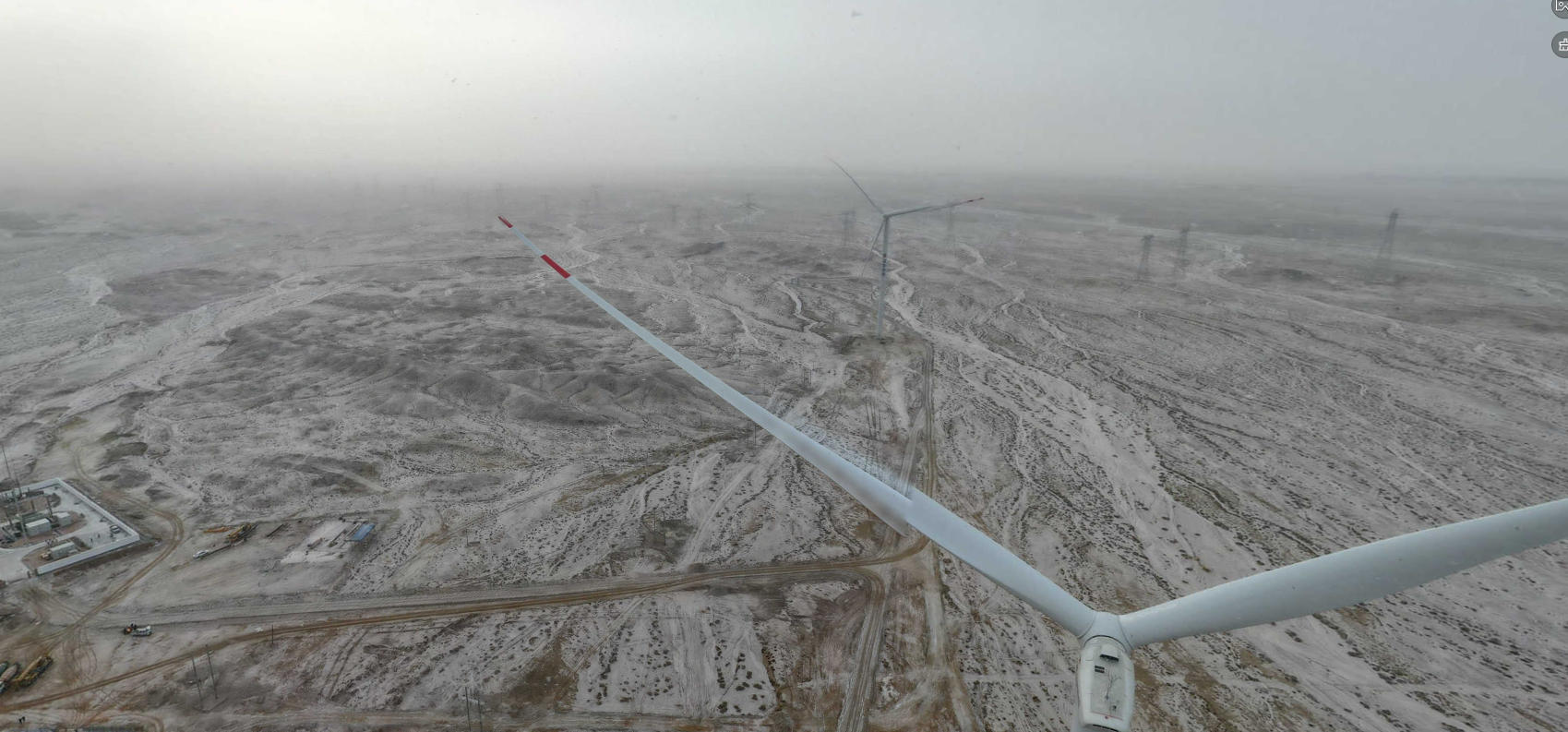
In extreme harsh environments such as ultra-low temperatures, freezing rain, and snow frost, traditional wind direction sensors often malfunction due to icing and frosting, leading to data interruption and monitoring loss. This poses significant hidden dangers to the safe operation of key fields like wind power generation and desert exploration. The FST200-202B Anti-icing Wind Direction Sensor is specially designed to address this pain point. With its core heating technology and multiple protective designs, it maintains accurate monitoring even in severe cold, serving as a reliable monitoring companion under extreme climatic conditions.
As the core competitive edge of the product, the anti-icing wind direction sensor is equipped with an intelligent constant-temperature heating system, achieving the dual protection of "anti-condensation + ice melting". The system has a built-in high-sensitivity temperature and humidity sensing module. When the ambient temperature approaches the critical value of 0℃ or the humidity reaches the condensation threshold, the heating function can be activated automatically. It rapidly heats up through planar uniform heating technology, defrosting and deicing the probe within 10 seconds, effectively preventing the measuring components from being restrained by icing. Meanwhile, the sensor adopts intelligent pulse heating control, which precisely matches the heating power according to the degree of low temperature. This not only ensures the deicing effect but also avoids energy waste caused by overheating. Coupled with 18-36V DC wide-voltage power supply, it is suitable for long-term outdoor operation requirements.
Based on the non-contact magnetic sensing measurement principle, the anti-icing wind direction sensor achieves high-precision data collection on the basis of heating protection. Compared with traditional mechanical structure sensors, the non-contact design completely eliminates errors caused by icing jamming and wear of rotating parts, greatly improving measurement accuracy and reliability. The sensor is also integrated with a multi-level lightning and surge protection design, with a built-in analog circuit that resists radio frequency and electromagnetic interference strongly. It can operate stably even under complex working conditions such as thunderstorms and strong winds.
The fault-tolerant circuit protection design is another highlight of the product, which can effectively avoid equipment damage caused by wrong wiring and reduce operation and maintenance risks and costs. With these advantages, the anti-icing wind direction sensor is widely applicable to harsh scenarios such as deserts, wind power generation sites, ultra-low temperature freezing rain, and high-humidity snow frost. Whether it is for the safe regulation of units in wind farms in cold northern regions or the continuous monitoring of high-altitude meteorological stations, it can continuously output stable and accurate wind direction data, providing core data support for equipment operation and safety management.
RECOMMEND NEWS


Contact Us
WhatsApp:
Email:

Contact Us
· Our company was founded in 1965 and has more than 60 years of experience in sensor R & D and production.
· Our products have obtained CE, RoHS, ISO, ATEX and other international certifications.
Please leave your contact information to get one-on-one product selection guidance and quotation services from professional engineers.